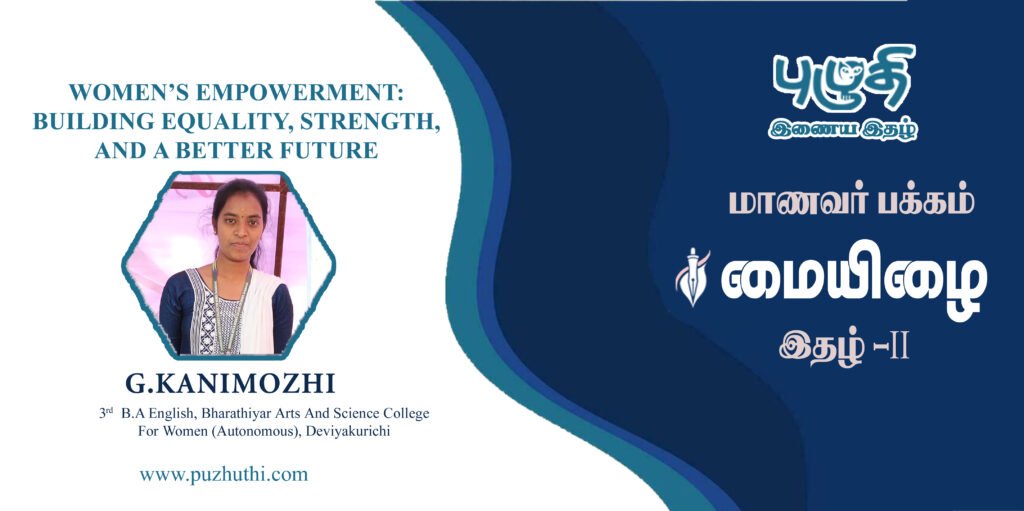
Women’s empowerment is one of the most important movements shaping modern society. It refers to the process of enabling women to have equal rights, opportunities, and the freedom to make their own choices in all aspects of life. Empowering women is not just about giving them power; it is about creating a world where they are respected, valued, and treated equally. It involves social, economic, political, and educational advancement that allows women to realize their full potential.
In many parts of the world, including India, women have historically faced discrimination and inequality. However, over the years, there has been significant progress due to education, awareness, legal reforms, and the efforts of social reformers and activists. Despite this progress, challenges still exist, making women’s empowerment an ongoing and essential mission.
1. Understanding Women’s Empowerment
Women’s empowerment means giving women the ability to make independent decisions about their lives. It includes access to education, employment, healthcare, and participation in decision-making processes. Empowerment also involves breaking traditional stereotypes and challenging societal norms that limit women’s roles.
True empowerment is not just external but also internal. It involves building confidence, self-respect, and awareness among women so that they can stand up for their rights. When women are empowered, they contribute positively to their families, communities, and the nation.
2. Historical Perspective
Historically, women were often confined to domestic roles and denied basic rights such as education and property ownership. In India, social reformers like Raja Ram Mohan Roy, Ishwar Chandra Vidyasagar, and Jyotirao Phule worked towards improving the status of women by advocating for education, widow remarriage, and the abolition of harmful practices like sati.
The freedom struggle also played a significant role in women’s empowerment. Women like Sarojini Naidu, Rani Lakshmi Bai, and Kasturba Gandhi actively participated in the movement, proving that women are equally capable of leadership and sacrifice.
Globally, movements like the women’s suffrage movement fought for women’s right to vote, marking a major milestone in achieving equality.
3. Importance of Women’s Empowerment
Empowering women is essential for the overall development of society. When women are educated and financially independent, they contribute to economic growth and social progress. Studies have shown that empowering women leads to better health, education, and living standards for families.
Women’s empowerment also promotes gender equality, which is a fundamental human right. It helps in reducing poverty, improving child welfare, and creating a more just and inclusive society.
Moreover, empowered women serve as role models for future generations, inspiring young girls to pursue their dreams without fear or limitation.
4. Role of Education
Education is the most powerful tool for women’s empowerment. It opens doors to opportunities and helps women gain knowledge, skills, and confidence. Educated women are more likely to participate in the workforce, make informed decisions, and advocate for their rights.
In India, government initiatives like Beti Bachao Beti Padhao aim to promote girls’ education and reduce gender discrimination. However, challenges such as poverty, early marriage, and lack of access to schools still hinder many girls from receiving education.
Promoting education for girls is crucial for breaking the cycle of inequality and empowering future generations.
5. Economic Empowerment
Economic independence is a key aspect of women’s empowerment. When women have access to employment and financial resources, they gain control over their lives and can support their families.
Microfinance initiatives, self-help groups (SHGs), and skill development programs have helped many women in rural areas become financially independent. Women entrepreneurs are also contributing significantly to the economy by starting businesses and creating job opportunities.
However, issues like wage inequality, lack of job opportunities, and workplace discrimination still need to be addressed.
6. Political Empowerment
Women’s participation in politics and decision-making is essential for true empowerment. It ensures that women’s voices are heard and their issues are addressed.
In India, the reservation of seats for women in Panchayati Raj institutions has increased their participation in local governance. Women leaders have played important roles in shaping policies and driving social change.
However, there is still a need for greater representation of women in higher political positions to achieve balanced and inclusive governance.
7. Social and Cultural Barriers
Despite progress, women continue to face various social and cultural barriers. Traditional beliefs, gender stereotypes, and patriarchal systems often limit women’s freedom and opportunities.
Practices like child marriage, dowry, and gender-based violence are still prevalent in some areas. These issues not only violate women’s rights but also hinder their development.
Changing societal attitudes and promoting gender equality are essential for overcoming these challenges.
8. Legal Rights and Protection
Legal frameworks play a crucial role in protecting women’s rights. In India, laws such as the Domestic Violence Act, the Dowry Prohibition Act, and the Sexual Harassment of Women at Workplace Act aim to safeguard women from abuse and discrimination.
While these laws are important, their effective implementation is equally necessary. Awareness about legal rights is also crucial so that women can seek justice when needed.
9. Role of Media and Technology
Media and technology have become powerful tools for women’s empowerment. Social media platforms provide a space for women to express their opinions, share their stories, and raise awareness about important issues.
Technology also enables access to education, employment, and information. Online learning platforms, digital banking, and remote work opportunities have opened new avenues for women.
However, challenges like online harassment and digital divide need to be addressed to ensure safe and equal access.
10. Role of Men in Women’s Empowerment
Women’s empowerment is not just a women’s issue; it requires the support and participation of men. Men play a crucial role in challenging gender stereotypes and promoting equality.
By respecting women, supporting their ambitions, and sharing responsibilities at home, men can contribute to creating a more balanced society.
11. Global Perspective
Women’s empowerment is a global movement supported by organizations like the United Nations. The Sustainable Development Goals (SDGs) include gender equality as a key objective.
Countries around the world are taking steps to improve women’s status through policies, education, and awareness campaigns. However, progress varies, and there is still a long way to go.
12. Challenges to Women’s Empowerment
Despite significant progress, several challenges remain:
- Gender discrimination
- Lack of education
- Economic inequality
- Violence against women
- Limited political representation
- Addressing these challenges requires collective efforts from governments, organizations, and individuals.
13. The Way Forward
To achieve true women’s empowerment, a multi-faceted approach is needed:
Promote education and skill development
- Ensure equal employment opportunities
- Strengthen legal protections
- Raise awareness about gender equality
- Encourage women’s participation in leadership
- Empowerment should begin at the grassroots level, with families and communities playing a key role.
Conclusion
Women’s empowerment is essential for building a just, equal, and progressive society. It is not just about uplifting women but about transforming the entire social structure to ensure fairness and equality. Empowered women are the foundation of strong families, vibrant communities, and successful nations. While significant progress has been made, continuous efforts are needed to overcome existing challenges and create a world where every woman can live with dignity, freedom, and opportunity .In the words of Malala Yousafzai, “We cannot all succeed when half of us are held back.” Empowering women is not just a goalit is a necessity for a better future.